

International football tournaments always produce surprises, but the 2026 World Cup in North America has taken unpredictability to a completely different level. The expanded 48-team format was supposed to give the big nations an easier path through the group stage. Instead, it’s done the opposite.
Several heavy favourites have been dumped out by opposition that the bookmakers had completely written off before kickoff, and the tournament bracket has turned into a chaotic scramble. Let’s take a closer look at the results that tore up the form book.
Cape Verde: The 525,000-Person Nation That Stunned the World
There’s no one else I can start with. One shock result can be a fluke. Three in a row cannot. The Blue Sharks, ranked 67th in the world and making their World Cup debut, arrived in North America with a squad drawn largely from Europe’s lower leagues. Nobody expected them to survive a group containing Spain and Uruguay.
They started by holding Spain to a goalless draw in Atlanta. Spain, the Euro 2024 winners and co-favourites for the tournament, couldn’t break down a side whose entire population is roughly the same size as Malaga.
Cape Verde then backed it up with a 2-2 draw against Uruguay, recovering from behind through a fearless late goal from Helio Varela. Two matches, two points against two of the tournament’s fancied sides. Even when they eventually exited in the round of 32, they pushed defending champions Argentina to extra time.
Lionel Messi opened the scoring, but Deroy Duarte equalised in the second half. In extra time, Lisandro Martinez restored Argentina’s lead, only for Sidny Lopes Cabral to curl in a stunning effort from the edge of the area to level it again. It took Cristian Romero’s header from a Messi corner, deflecting off Cape Verde’s Diney Borges in the 111th minute, to finally end their run. Argentina won 3-2, but goalkeeper Vozinha made eight saves and became one of the most memorable players of the tournament.
Paraguay Send Germany Home on Penalties
Germany had never lost a World Cup penalty shootout. That record fell apart in Boston when Paraguay, ranked 41st in the world, knocked out the four-time champions 4-3 on penalties after a 1-1 draw.
Julio Enciso headed Paraguay in front just before half-time from Matias Galarza’s cross. Kai Havertz glanced home an equaliser early in the second half, and Germany thought they’d won it when Jonathan Tah powered in a header from a corner. But VAR ruled it out for a foul on Paraguay goalkeeper Orlando Gill, a decision that will be debated for years.
In the shootout, Gill was immense. He saved penalties from both Havertz and Nick Woltemade, and Tah blazed his effort over the bar. Jose Canale scored the decisive sudden-death penalty to send Paraguay through. Al Jazeera described it as potentially the greatest upset in World Cup knockout history, surpassing Bulgaria’s defeat of Germany at USA ’94. Paraguay were given a national holiday to celebrate.
Results like this are exactly why it’s a good idea to check the latest football free bets before backing a heavy favourite in a knockout tie. When a four-time champion can’t get past a side ranked 41st, a bit of extra cover goes a long way.
Norway Knock Out Brazil Through Haaland’s Late Double
The round of 16 match between Norway and Brazil in East Rutherford, New Jersey looked like a formality for the five-time champions. Brazil had some of the most expensive attacking talent on the planet and were expected to cruise into the quarter-finals. Norway hadn’t appeared at a World Cup since 1998.
For most of the match, Brazil looked likely to grind out a result. Bruno Guimaraes missed an early penalty, and goalkeeper Orjan Nyland produced a string of saves to keep the score level. Then Erling Haaland took over. He headed home in the 79th minute before collecting a pass from Andreas Schjelderup and arrowing an unstoppable shot into the bottom corner in the 90th.
Neymar pulled one back from the penalty spot deep into stoppage time, but it was too late. Norway won 2-1 in what their media called the greatest result in the country’s football history. It also kept alive Norway’s remarkable record of never having lost to Brazil.
Morocco Outclass the Netherlands, Then Dismantle Co-Hosts Canada
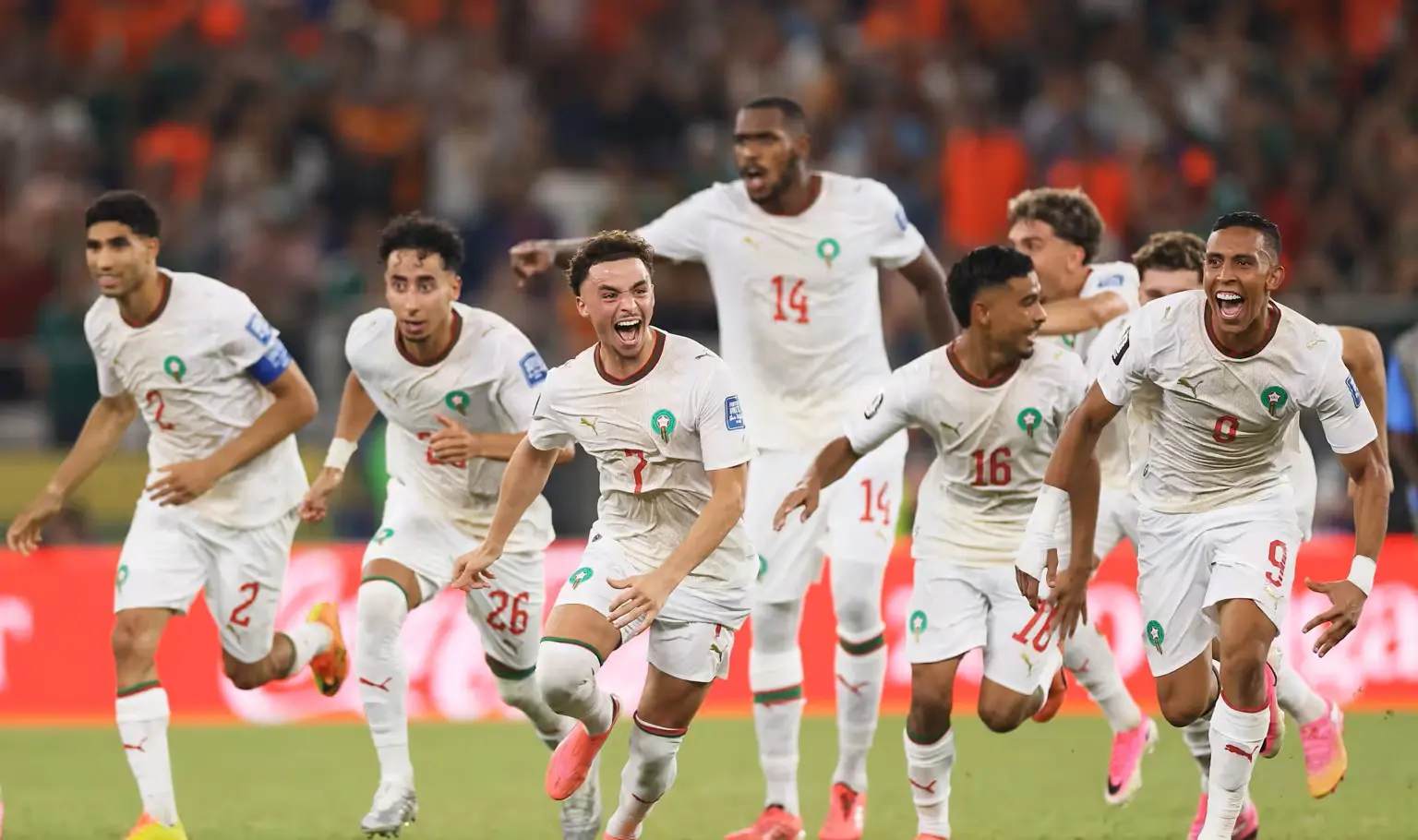
Morocco’s run deserves a double mention. First, they knocked out the Netherlands on penalties in the round of 32 in Monterrey. Cody Gakpo, who had just announced the loss of his unborn son, scored an emotional opener in the 72nd minute. But Issa Diop headed in a dramatic equaliser in the first minute of stoppage time to force extra time. In the shootout, Yassine Bounou saved from Crysencio Summerville and Ismael Saibari rolled home the winning penalty as Morocco won 3-2 on spot kicks.
Then came co-hosts Canada in the round of 16 in Houston. Canada had generated massive hype among local supporters after their best-ever World Cup run. Ranked 30th in the world, they’d never won a World Cup match before this tournament.
Morocco, ranked 6th, were firm favourites on paper but Canada fancied their chances with home support behind them. Instead, Azzedine Ounahi scored twice in the second half and Soufiane Rahimi added a third in stoppage time. Morocco won 3-0 with just five shots on target, the fewest by a winning team in a World Cup knockout match since records began in 1966.
What These Results Tell Us About Tournament Football
These results prove that international knockout football doesn’t follow rankings or transfer values. Paraguay’s players earn a fraction of Germany’s wages. Cape Verde’s population wouldn’t fill the Bernabeu twice over. Norway hadn’t qualified for a major tournament in nearly three decades before this summer.
The common thread is tactical discipline and collective belief. Paraguay sat deep and trusted their goalkeeper. Cape Verde refused to be intimidated by any name. Norway waited for their moment and struck when it mattered most. Morocco combined defensive organisation with ruthless efficiency on the counter.
For anyone looking at future tournaments, the lesson is clear. Don’t rely on historical prestige when analysing knockout matches. The gap between the traditional elite and the rest of the world has been shrinking for years, and this World Cup has confirmed it. The next surprise is always closer than you think.
